When "Idiosyncratic" Risk is Anything But: A Look Inside the 2025 Q4 Thematic Review
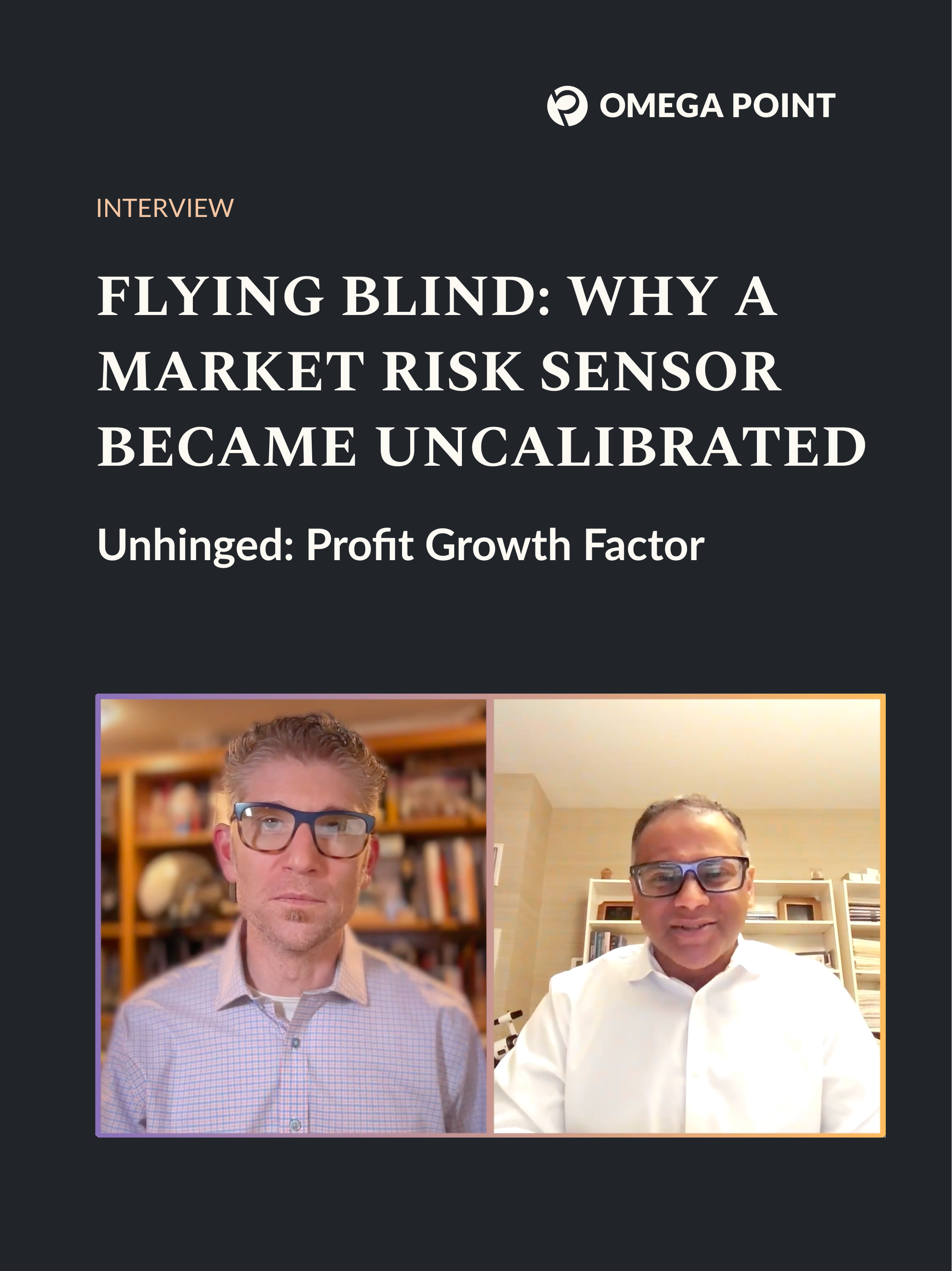
I recently sat down with Anureet Saxena (CEO of Alignment Trio Management) to unpack the findings from the 2025 Q4 Thematic Review. (You can watch our full conversation in the video below).
If you are a Portfolio Manager, you know the frustration: You have hedged your sectors, you have neutralized your style factors, and your risk model says you are clean. Yet, you are still seeing "unexplained" volatility that drags on performance.
The standard answer is to call this "idiosyncratic risk"—noise unique to individual stocks. But our latest research suggests that for many of you, that “noise” is actually a signal you just aren't measuring yet.
Here is the high-level breakdown of what we found in Q4 2025, and why the distinction between "long-term factors" and "short-term themes" is disappearing.
The Blind Spot: Where "Transient" Becomes "Systematic"
Traditional risk models are excellent at capturing long-term secular drivers like Value, Momentum, and Growth. But they often miss what we call "transient risk factors"—short-term but powerful forces like Tariffs, Supply Chain disruptions, or AI innovation.
In Q4, these weren't just headlines; they behaved like mathematical risk factors. As Anureet put it, "For a portfolio manager, the difference between a long-term and short-term driver of risk is a distinction without a difference". If it moves your P&L, it’s risk—and right now, themes are moving P&L.
The "Cockroaches" of Q4: Three Themes That Defined the Quarter
In our review of over 500 thematic indexes, nine stood out as statistically significant drivers of residual returns. Three of them perfectly illustrate why a standard Sector/Style model isn't enough anymore.
1. Regional Banks: The "Barbell" Effect
The banking sector is undergoing a massive structural shift that a simple "Financials" sector tag can't capture. Following the SVB crisis, we are seeing a "barbelling effect".
- The Winners: Large Systemically Important Financial Institutions (SIFIs) and very small community banks are holding steady.
- The Squeeze: Mid-tier regional banks are being crushed by consolidation and the high fixed costs of AI and deregulation.
- The Result: "Regional Banks" has emerged as its own distinct systematic risk factor, completely separate from the broader sector. As Jamie Dimon famously said, "When you see one cockroach, there are probably more"—and this theme is proving him right.
2. Tariff Risk: The Hidden Correlation
With the Trump administration’s unorthodox approach to trade, Tariff Risk returned as a major driver of volatility in Q4.
- The Trap: Two companies in the exact same industry can have opposite tariff risk profiles depending on where they manufacture and sell.
- The Consequence: If you ignore this, you might think you are diversified when you are actually doubling down on a political bet. Q4 data showed this theme had a statistically significant factor return of 144bps.
3. The AI Ecosystem: It’s Not Just Tech Anymore
AI has mutated from a "Software" theme into a cross-sector mega-theme. It now drives returns in Utilities (powering data centers), Industrials (building them), and Consumer Discretionary (fighting for chip supply).
- Intra-Industry Dispersion: We are seeing huge splits within industries. For example, utilities that have signed deals with AI data centers are decoupling from those that haven't.
The Solution: Augmented Risk Models
The market environment of 2026—defined by the collision of the AI revolution and political unpredictability—requires a new toolkit.
The answer lies in Augmented Risk Models: explicitly layering these thematic factors on top of your commercial risk model. By doing this, you can:
- Quantify your exposure to "soft" themes like Tariffs.
- Explain drawdowns that previously looked like random noise.
- Manage risk proactively rather than reacting to headlines.
Watch the Full Breakdown
In this interview, Anureet and I go much deeper into the data, discussing how these themes are likely to persist into 2026 and what you can do to insulate your portfolio.
Download Systematic Perspectives Thematic Review Q4 2025 here
Disclosure:
The information contained herein has been prepared solely for informational and educational purposes and reflects the views of the speakers as of the date of publication. It is based exclusively on publicly available information believed to be reliable; however, neither Alignment Trio Management nor its representatives, including Anureet Saxena, or Omega Point or its representatives, including Roland Smart, have independently verified the information or undertaken any duty of due diligence. This content does not constitute investment advice, an offer to sell, or a solicitation of an offer to buy any security, nor should it be relied upon in connection with any investment decision. Any examples or discussions of securities or markets are purely illustrative and are not intended as recommendations. Readers are solely responsible for any trading decisions made in reliance on this material. Alignment Trio Management, Omega Point, and their respective affiliates and representatives disclaim any liability for any direct or consequential loss arising from any use of the information contained herein. Any references to third-party entities or individuals are for informational purposes only and do not imply any endorsement, association, or wrongdoing.